

I used to be afraid of heights.
Not just uncomfortable with heights. I was afraid to the point of crying and having panic attacks.
The worst experience happened while biking across the Golden Gate Bridge. It was the beginning of a 500-mile bike trip down the California coast from San Francisco to Santa Monica. I should have been excited about this incredible adventure, but crossing that bridge was terrifying. I started crying and curled into the fetal position while still trying to ride a bike, which, for the record, is really hard to do. People yelled at me to keep moving, which only made it worse. By the time I made it across, I was emotionally exhausted.
That was the last time I really fought my fear for a long time. My fear had won.
And then it grew.
I started avoiding bridges. I couldn’t drive across some of them. I watched for situations that might scare me and found ways around them. Avoidance worked, at least in the moment, but every time I avoided something, I reinforced the idea that I couldn’t handle it.
My world became smaller.
Early this summer, I had brunch with an old friend I hadn’t seen in about 15 years. She had always been afraid of heights too, and she told me her fear had progressed to the point that she wasn’t taking escalators anymore. I understood exactly how that could happen because I had watched it happen to me. Sitting there listening to her, I realized I didn’t want my world to keep getting smaller.
I needed to change something.
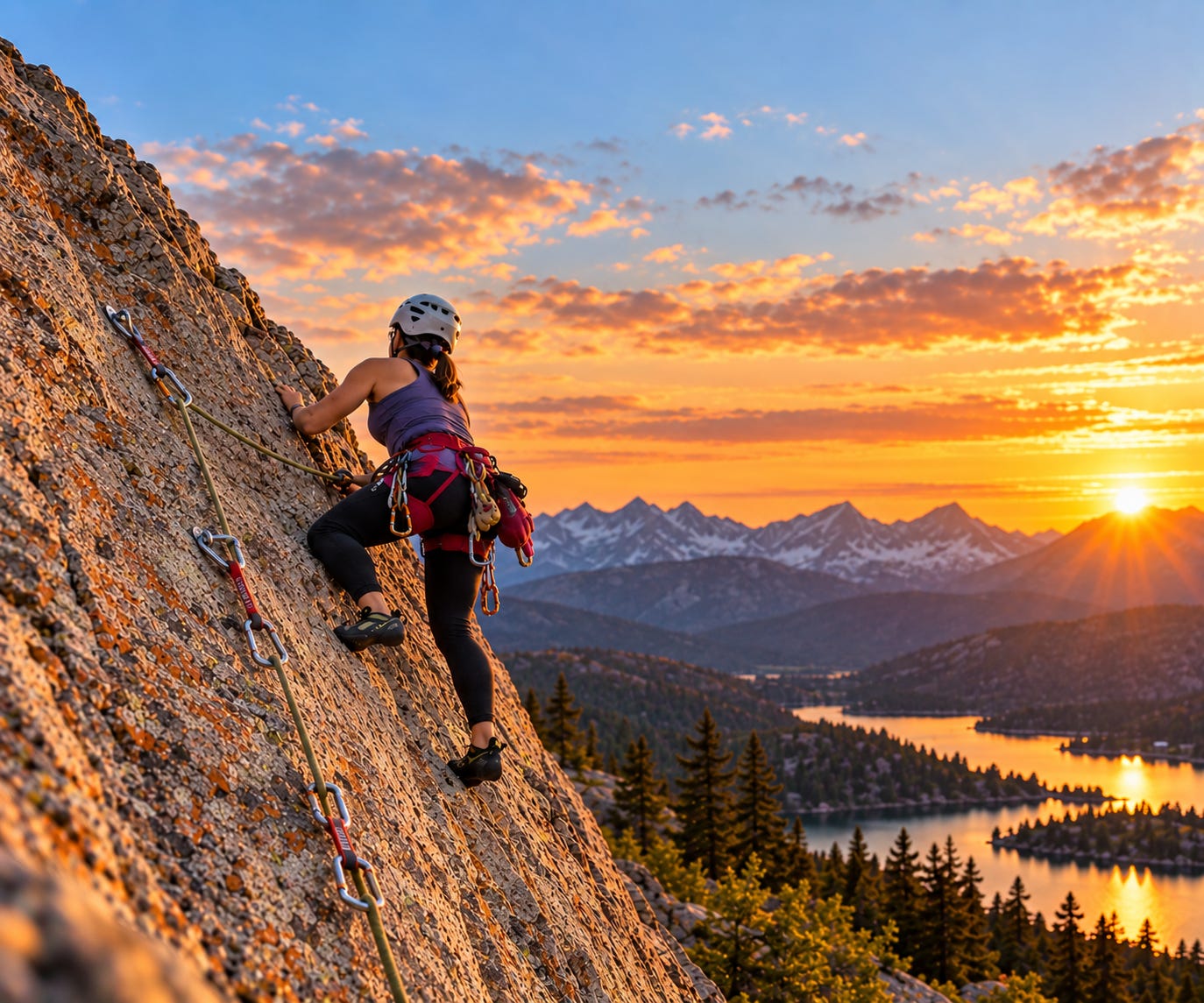
Now, at 53, I rock climb. Outside. On actual cliffs.
So what happened?
I didn’t wake up one morning and suddenly become fearless. I didn’t decide I was going to conquer my fear. And I definitely didn’t do it alone.
I said yes to climbing indoors with some friends.
When they first took me to the climbing gym, they didn’t tell me my fear was ridiculous or that I just needed to get over it. They explained the equipment. They explained the math. They showed me how the systems worked and why I could trust them. Most importantly, I trusted the people holding the other end of the rope.
When I was scared, they gave me time. They encouraged me and talked me through it. When I made it to the top, they celebrated with me.
Then they took me outside.
Rock climbing has given me plenty of opportunities to be afraid. There are moments on a wall when my brain simply says, “Nope.” My body tightens, my heart starts racing, and every instinct tells me to get somewhere that feels safe.
But now there’s a friend on the other end of the rope, and I know I’m safe.
“I’ve got you.”
“Take your time.”
“You’re okay.”
Little by little, I learned to trust the gear. I learned to trust my climbing partners. Eventually, I started learning to trust myself. My legs would work. My arms would work. I could be scared and still do hard things.
Then came the Ashley Gorge via ferrata. I thought of it as my final exam.
Before going, I had seen pictures of a four-inch-wide bridge and decided that would obviously be the terrifying part. No, I didn’t bother studying the maps or reading all the details. I’m actually glad I didn’t, because then I would have known about the single-cable bridge.
The first time across, I didn’t open my eyes.
The terror was real.
Then came the Leap of Faith. You stand on one platform and jump across a gorge to another platform with hundreds of feet of air underneath you.
My brain had some thoughts about this.
I hugged the rock. I cried. And my friend stayed with me.
There was no yelling. No embarrassment. No “Just do it.” No making me feel ridiculous because something that seemed manageable to someone else felt impossible to me.
There was just someone there helping me believe I could do it.
Eventually, I jumped.
And I made it.
I’ve thought a lot about the difference between that experience and the Golden Gate Bridge. Both times I was genuinely terrified. On the bridge, people yelled at me to move, and afterward my fear grew.
At Ashley Gorge, someone helped me move.
My fear got smaller.
Support doesn’t mean someone does the scary thing for you. My friend couldn’t make that jump for me. My climbing partners can’t make the next move when I’m halfway up a wall. Eventually, I have to move my own feet.
But having someone beside you who believes you can do it can change what you believe you’re capable of doing.
Sometimes we need someone who sees something in us that we can’t quite see yet. Someone who shares what they know, gives us perspective, encourages us when we’re stuck, and stays beside us while we figure out the next move.
That’s mentorship. It’s also friendship. And sometimes the line between the two isn’t nearly as clear as we think.
That’s one of the reasons Women in Leadership and our mentorship program matter so much to me. Mentorship isn’t just about getting career advice from someone with a better title. It’s about building relationships with people who help each other grow. Sometimes you’re the person saying, “I’ve got you.” Sometimes you’re the one who needs to hear it.
Our next Women in Leadership mentorship program kicks off in January. Join as a mentor. Join as a mentee. Volunteer. Come to an event. Or simply become part of the community. You don’t have to know exactly what you’re looking for. Sometimes meeting the right person is the beginning.
And you don’t have to wait until January.
Join us on October 21 for Beyond the Boardroom: Your People Skills Are Showing. We’ll be talking about how we communicate and work with people when things aren’t easy, including how to move from aggressive, easygoing, or avoidant behaviors toward being assertive and effective.
I still get scared. I still hug the rock. There are still occasional tears.
Becoming fearless was never really the goal.
The goal was to stop letting fear decide how big my world could be.
Sometimes making your world bigger starts with finding people who will stand beside you while you take the next step.